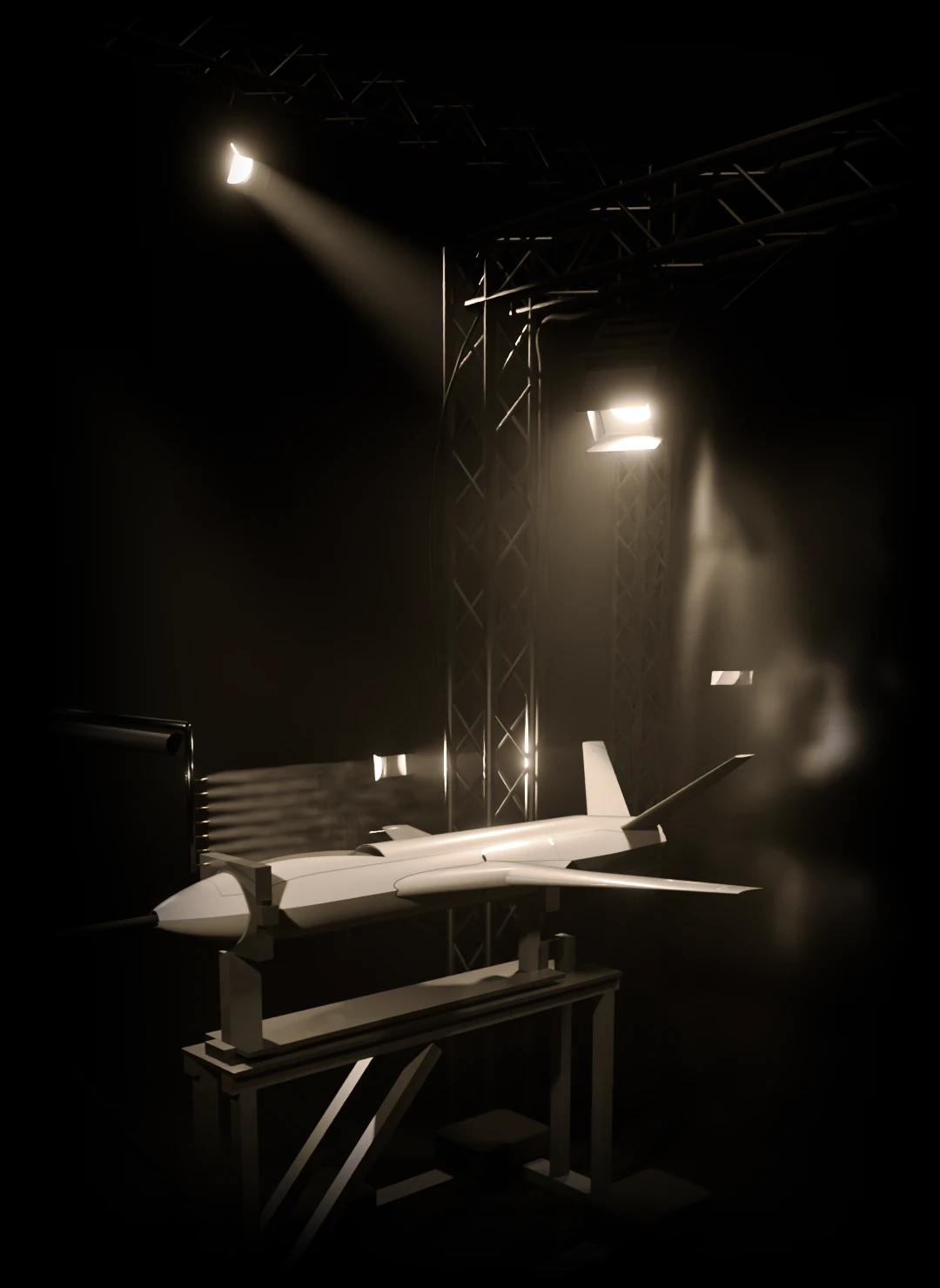
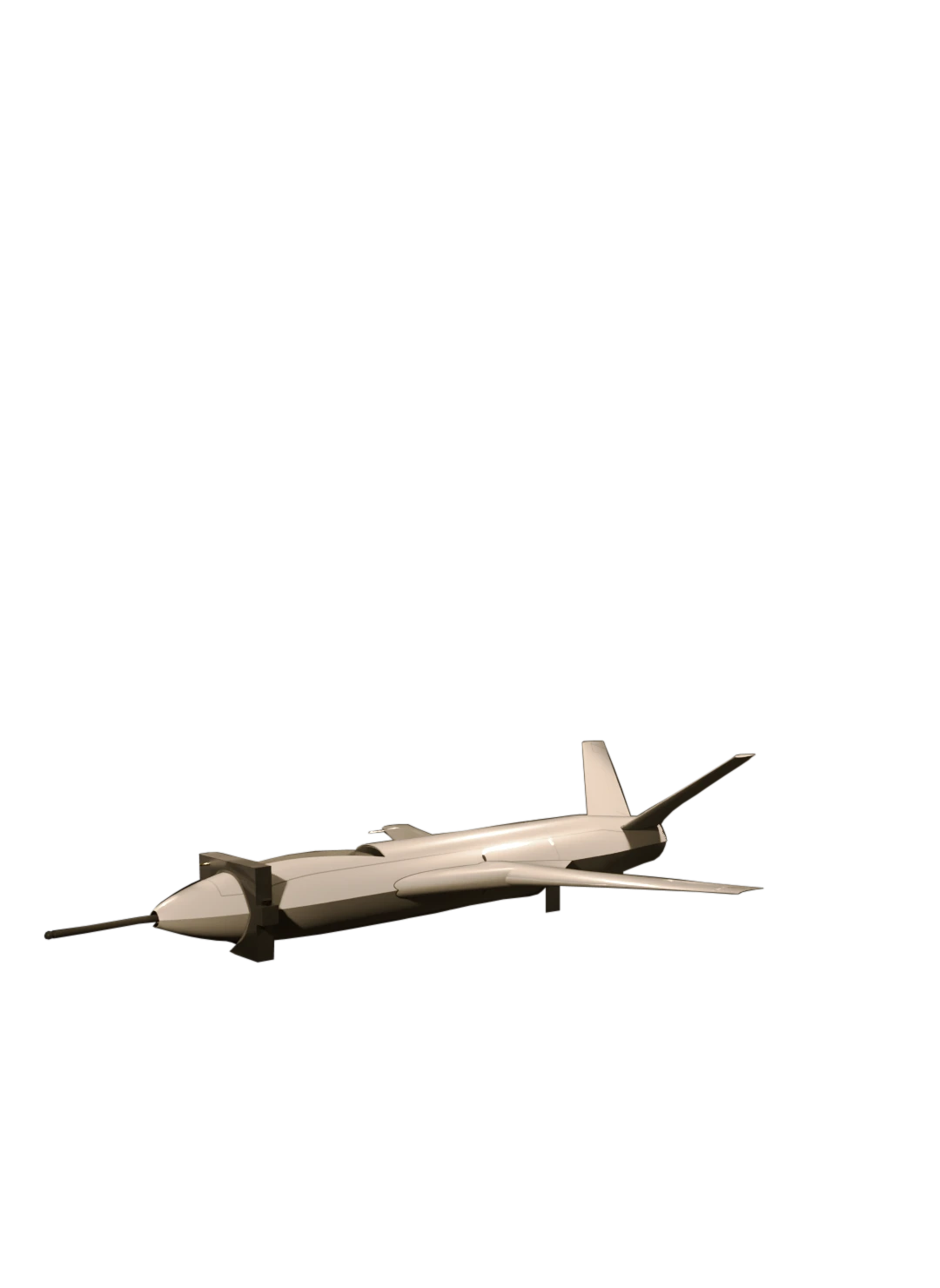
A 600 km/h drone, designed part by part to be made
Designed for about 600 km/h, and checked on paper and in simulation. Nothing has been cut, run or flown yet. The pictures are renders.
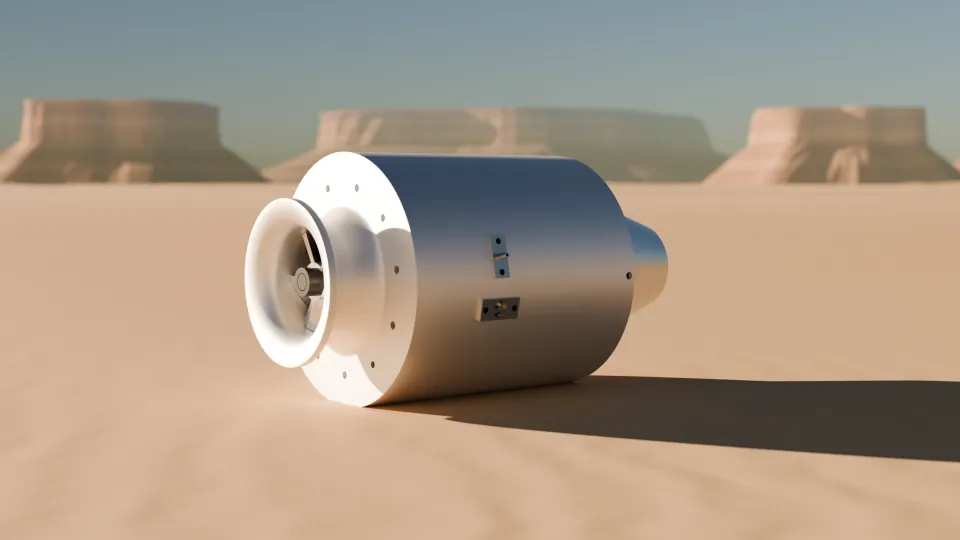 The engine 21 drawn parts
50 parts drawn, each with its fits and tolerances
37 of them the kind our partner shop mills and turns
Why a drone
We picked a drone because it mixes difficult CNC machined parts with cast ones, so it shows what careful design and machining take. We’re a Canadian manufacturing service. We can help you get your design ready to make, and then make it.
How it’s made
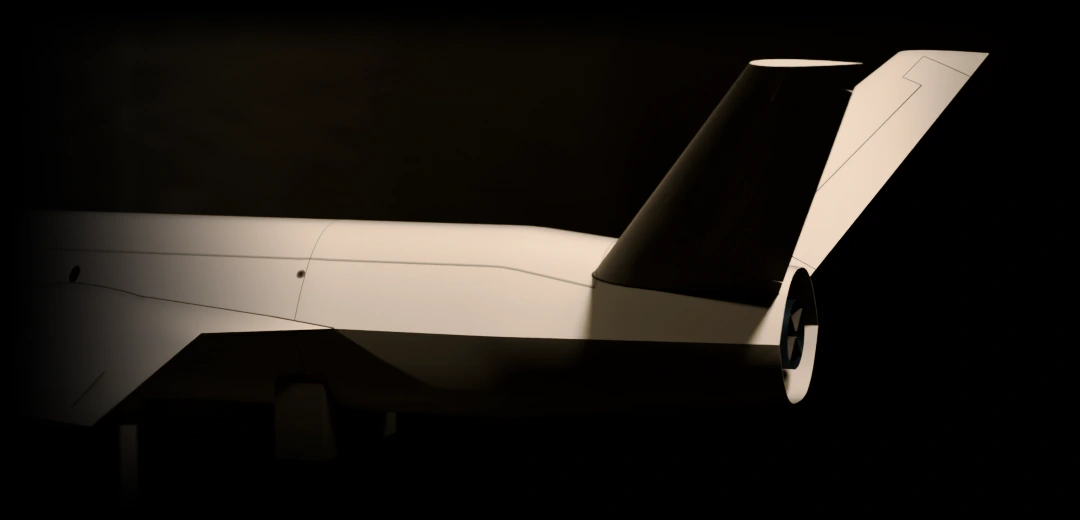
Every part is drawn for how it would be made. Most would be milled or turned, and those are the kind of part you can order from us.
You can order parts like these
37 of the 50- 95-axis millingThe compressor wheel and the diffuser behind it, four of the body’s frames, and the titanium block the tails plug into.
- 133-axis millingThe flat frames, the titanium rails and bands that hold the engine, the wing joints and the brackets.
- 15TurningThe engine’s case and shaft, the bearing cartridges, the nose pole, and the small inserts and columns.
- In titanium7 of those 37, in grade 5. The rest are aluminum (21), steel (5) and stainless (4).
Parts we don’t make
13 of the 50, and the skins- 2Investment castingThe turbine wheel and the guide vane ring, in Alloy 713C. A foundry pours them, then only their fits, faces and blade tips are machined.
- 6Sheet and tubeThe combustor and its fuel tubes, the closure ring and the exhaust nozzle.
- 4Inconel and PEEKThe vanes in the exhaust, their collar and two small nozzles. Machined, but not in materials we offer.
- 13D printingThe engine’s front cover, printed and then turned.
- Carbon skinsThe body, the wings and the tails, laid up in moulds.
The machine for each part is the one our quote engine picks from its model. The fasteners, the bought parts and the carbon aren’t counted in the 50.
How we check it
A mistake found in the model costs time. Found in metal, it costs the part.
Fits and tolerances on every part
Each of the 50 says what’s bored, reamed, turned or bonded, and how closely. The compressor’s blades, for one, run 0.25 mm from the cover around them.
Every fastener is drawn
Each screw, stud, nut and pin sits in its own hole in the model, with the thread it grips and room for the tool that turns it.
Put together on the computer first
The whole jet is assembled step by step, and taken apart again, so a part that can’t be fitted is found before it’s cut. Four of the engine’s screws, as first drawn, could never be reached. Now they go in from the front.
The checks your part gets
The machined parts run through the same design checks as a part you upload.
The film
From the first part to a landing, in 1 minute 19. The parts and how they go together are the design’s own models. The run on the stand and the flight are animated: no engine has run and nothing has flown.
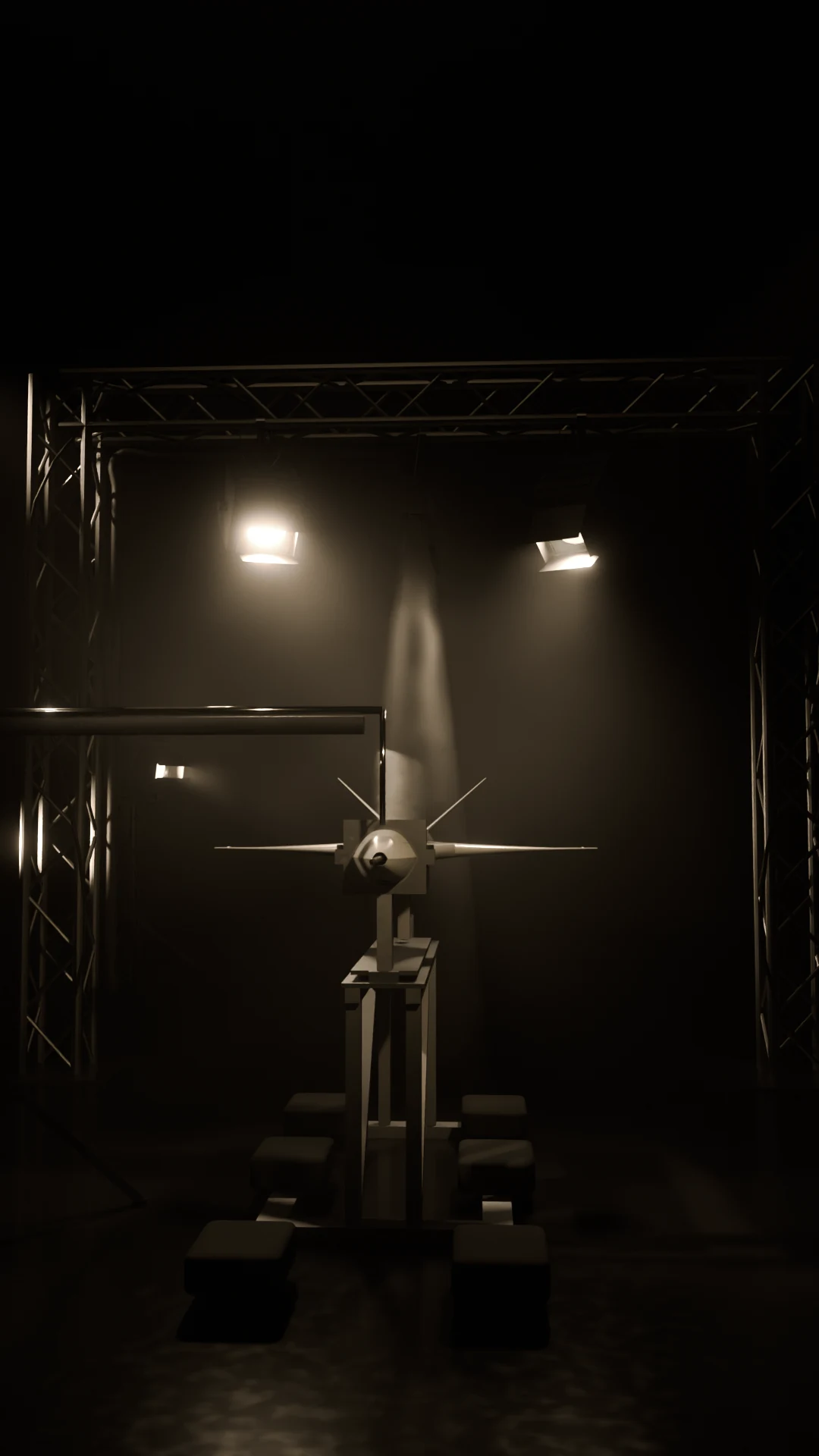 Play the film, 1 minute 19 seconds
What it is, and what it isn’t
It is
- A design. Our own, drawn part by part, and checked on paper and in simulation.
- A small jet. 1.3 m across the wings, about 9.5 kg with its fuel, to be flown by a pilot who can see it.
- A showpiece. It’s there to show the parts, the fits and the checking.
It isn’t
- Built. Nothing has been cut, run or flown. The top speed is worked out, not measured.
- For sale. We make parts. The engine’s models and drawings are free; the drone’s aren’t published.
- Filmed. Every picture here is a render of the design.
Send us your part
Upload a model and see an instant price in Canadian dollars. A machinist checks every quote within one business day, and the part is machined in Canada by our partner shop. If the design isn’t ready, book a call and we’ll go through what would make it easier to machine.